
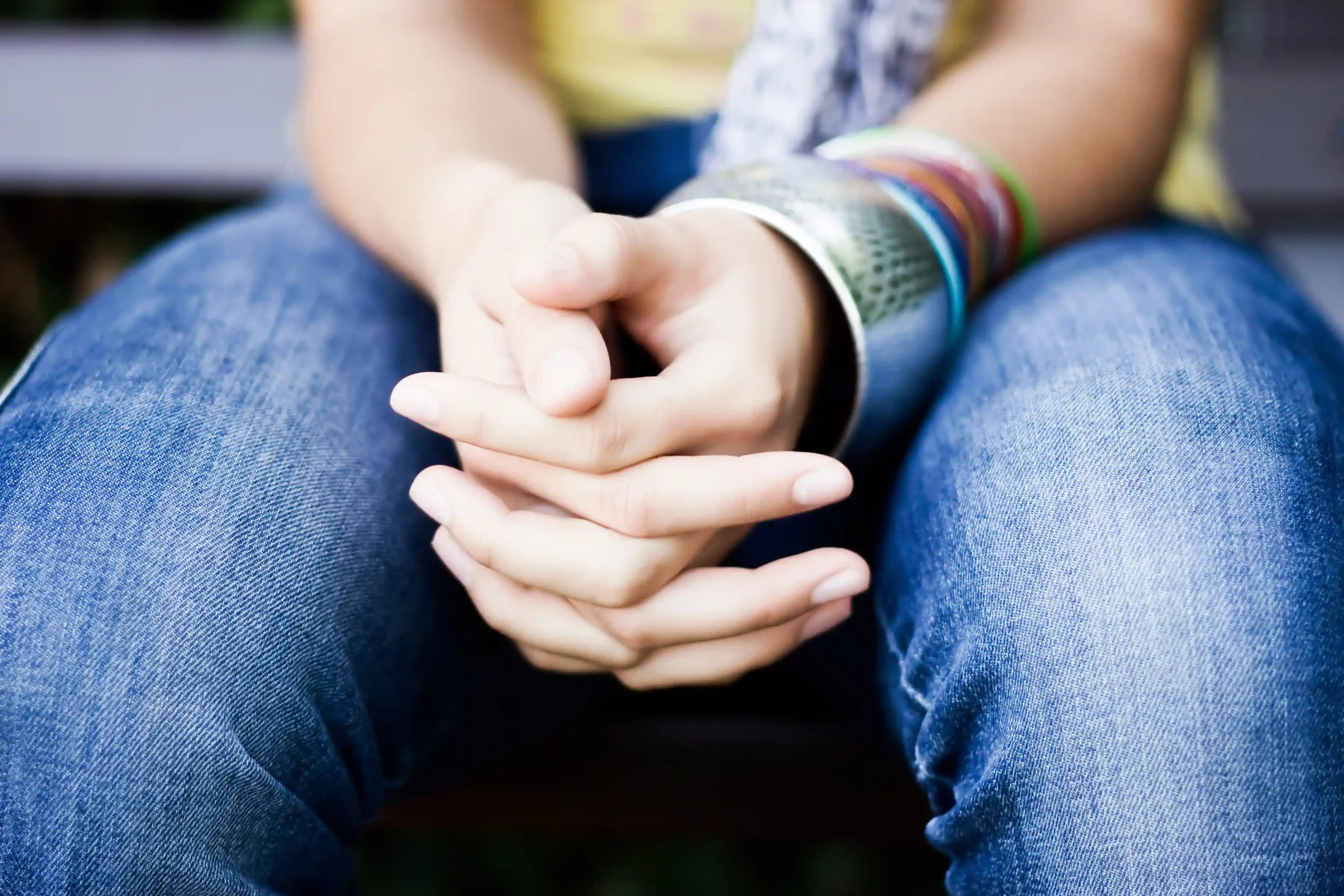
Active relaxation and breathing techniques
Your body is uniquely equipped with relaxation responses that can help to calm you down when you feel stressed. These techniques will help you to relax and de-stress.
Deep breathing
This is the simplest way to relax, and you can do it anywhere! Combine deep breathing with other techniques for maximum benefits.
For deep breathing, sit with your back straight. Put your hands on your knees, or one on your stomach and the other on your chest. Breathe in slowly through your nose, deep into your stomach. Breathe out slowly through your mouth. Push out as much air as you can. Notice how your hands rise and fall.
Muscle relaxation
Tensing and relaxing different muscles in your body helps you to become more aware of where you’re holding stress so you can let it go.
Sit or lie in a comfortable position and remove restrictive clothing. Starting at your toes, tense the muscles in one foot and notice how it feels. Hold that tension for ten seconds, then release. Relax your foot completely and notice how it feels. Now, do the same with your left foot, then your calves, thighs, hips and buttocks, stomach, chest, back, arms and hands, shoulders, right until your head and neck.
Visualisation
Visualisation is a traditional meditation practice that can be very calming. For this, you sit somewhere comfortable, close your eyes and imagine a setting where you feel at peace. This might be in a forest, beside a waterfall, a deserted beach, or a place you loved as a child.
Picture your place as vividly as you can – not just how it looks but what it feels and smells and sounds like. You can use visualisation apps or sounds to help. Whenever you feel a worry entering your head, move deeper into your visualisation. Your tensions will slip away.
Self-massage
Self-massage can be a great way to help remove stress held in your body, and it also feels great. Try different techniques to see what you like. Start by kneading your neck and shoulders. You can use a soft chopping motion with the edge of your hand, tap with your fingers, knead, or dig in and make tiny circles with a thumb or finger for tough knots.
Alternatively, you could trade massages with a good friend or sibling.
Movement and exercise
Many people find stress-relief and pleasure in a regular exercise routine. You may like to incorporate mindfulness (awareness of your body and where you hold tension) to double the stress-relief factor.
Look for exercise that involves repetitive movements, such as dancing, running, swimming, cycling, or climbing. Focus on being fully engaged with the moment and paying attention to how your body feels.
There are many other ways to practice active relaxation – yoga and Tai Chi are popular, as are different types of meditation. What do you do to help yourself relax? If you’d like to talk to someone, Youthline’s free helpline is available 24/7.
Get professional support
If you’re experiencing harm or are worried about someone you care about, there are people at Youthline who can help. Here’s how you can reach out:
Face to Face counselling (Auckland Only)
Talking to a Youthline counsellor online or in person can be helpful. Find out more here.
24/7 National Helpline
Remember, you can contact us anytime – our Helpline is free, private and available 24/7. There’s no need to worry about anyone finding out. Here’s how you can reach out for help:
Call: 0800 37 66 33
Text: 234
Email: talk@youthline.co.nz
Webchat: You can also chat with us online if that’s easier for you.